Hotel owners and operators should prioritize digital infrastructure as a capital investment rather than an expense, according to Sienna Crawford, as it drives sustained commercial value and competitive advantage. For most hotel leadership teams, marketing is seen as a series of short-term expenses, including seasonal campaigns and promotional pushes, which are often cut when budgets fall short.
However, when marketing is viewed as an investment, the entire financial equation changes, becoming a high-value revenue asset that builds long-term equity and reduces reliance on expensive online travel agencies (OTAs). At Cogwheel, the focus is on building a hotel’s digital revenue infrastructure, rather than just running campaigns.
The Shift: Campaigns vs. Infrastructure
Traditional hotel marketing focuses on isolated efforts, such as building a seasonal offer and promoting it, whereas revenue infrastructure creates an integrated, permanent ecosystem that connects every touchpoint of the guest journey. This approach allows for continuous tweaking of tactics, updating messaging, and shifting resources to support business needs as they evolve.
Read Also: Xi Zhe Wuxi, Curio Collection by Hilton Opens in Jiangsu
The efforts made through revenue infrastructure compound over time, creating a flywheel effect. By contrast, traditional campaign-based marketing often reacts to low occupancy with emergency ad spend, rather than proactively driving demand.
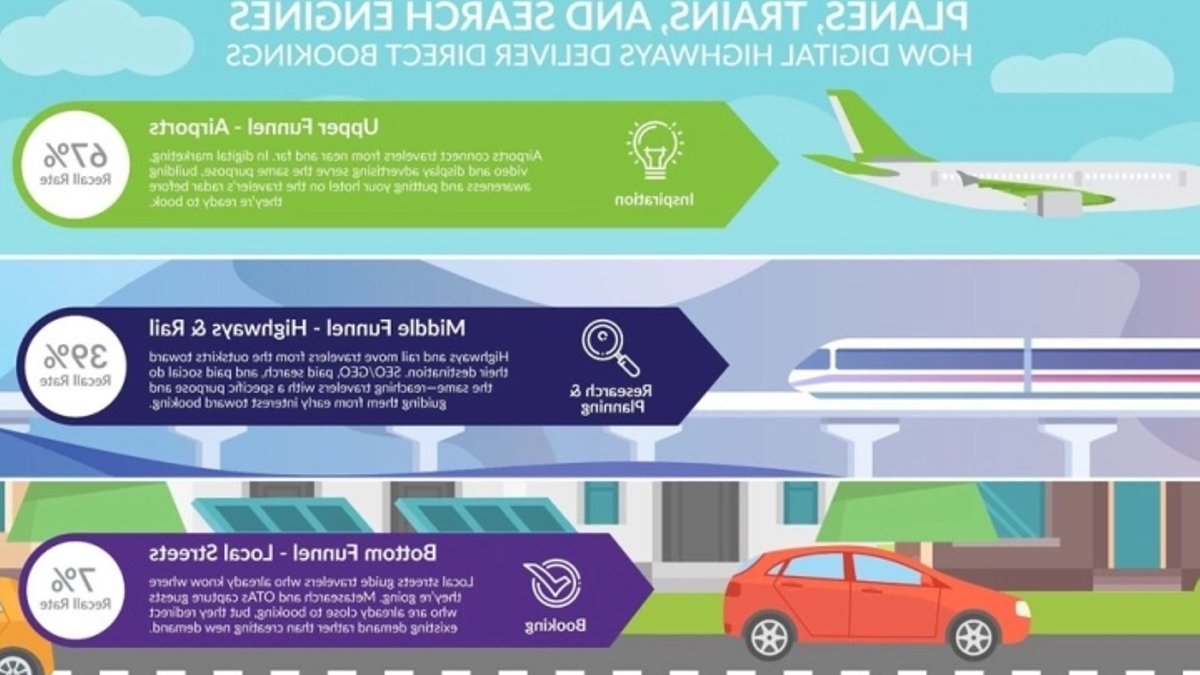
Planes, Trains, and Search Engines: How Digital Highways Deliver Direct Bookings
To understand the importance of digital infrastructure, consider how real-world economies thrive. Economically viable cities have diverse industries, accommodate high volumes of people, and have built incredible physical infrastructure to bring people in and move them around. In the digital market, a hotel’s website and booking engine serve as the destination, with digital “planes, trains, and automobiles” bringing guests directly to the hotel.
The digital infrastructure can be divided into three funnels: upper (inspiration), middle (research and planning), and bottom (booking). The upper funnel, equivalent to airports, generates broad awareness and fills digital pathways with warm leads through video and display advertising. The middle funnel, akin to highways and light rails, funnels people close to a destination, using SEO, paid search, and paid social to address specific purposes and convert interest into intent.
Read Also: Park Hyatt Johannesburg wins Africa’s leading new hotel
The bottom funnel, equivalent to local streets, is for users who are already close to booking, with metasearch and OTAs serving as tactics to redirect people to the hotel’s booking engine. However, this approach can be costly and cap growth potential, as it focuses on users who have already made up their minds.
The Direct Booking Trap: Why You’re Spending Budget in the Wrong Place
Hotels often spend their budgets on bottom-funnel tactics because it’s easy to show a good return on ad spend (ROAS). However, this approach neglects the influence of upper-funnel channels and fails to convey the true value of marketing as revenue infrastructure. Judging an upper- or middle-funnel campaign solely on ROAS is like saying an airport didn’t sell enough subway fares, despite the influx of riders.
To evaluate performance accurately, leadership must view the revenue infrastructure as a whole system, rather than judging each segment in isolation. When the pathways are built correctly, overall direct booking volume goes up, acquisition costs go down, and market share increases. The flywheel effect comes into play, driving volume and influencing behavior as the infrastructure reaches higher into the funnel.
Read Also: Air France Revives Cape Town Paris Summer Route
Why the Booking Window Is Ruining Your Commercial Strategy
The fundamental flaw in most commercial strategy conversations is an over-emphasis on the booking window. While teams cling to this timeframe as proof they understand their target guest, they miss opportunities to influence behavior and increase their pipeline.
The challenge is getting commercial strategy teams to zoom out and have conversations further out, focusing on the influence window rather than the booking window. By building infrastructure across all levels of the funnel, hotels can influence a massive pool of potential guests early and often, making a greater impact when the booking day arrives. This extended timeframe also allows hotels to better understand their guests’ needs and preferences, enabling more targeted and effective marketing efforts.
By prioritizing digital infrastructure and shifting from a campaign mindset to an infrastructure mindset, hotel owners and operators can create a high-value revenue asset that drives sustained commercial value and competitive advantage. As the digital market continues to evolve, it’s essential for hotels to adapt and focus on building influential assets that grow over time, rather than just running short-term campaigns.